


Tooth Caries (Cavities): Causes, Early Signs, Stages, Prevention, and Treatment
Tooth caries, commonly known as dental cavities or tooth decay, is one of the most prevalent chronic diseases worldwide. According to the World Health Organization, it affects nearly 100% of adults and 60–90% of schoolchildren in most countries. If left untreated, cavities can lead to pain, infection, and even tooth loss. This comprehensive guide covers everything you need to know about tooth caries in 2025.
What Causes Tooth Caries?
Tooth caries is caused by a combination of factors known as the “caries tetrad”:
- Bacteria – Especially Streptococcus mutans and Lactobacillus that live in dental plaque.
- Sugars & Carbohydrates – Frequent consumption of sugary foods/drinks feeds these bacteria.
- Time – The longer sugars stay on teeth, the more acid is produced.
- Susceptible Tooth Surface – Weak enamel (due to genetics, poor mineralization, dry mouth, etc.)
The bacteria convert sugars into acid → acid demineralizes (softens) the enamel → a cavity forms.
Major Risk Factors
- Frequent snacking or sipping sugary drinks
- Poor oral hygiene
- Dry mouth (xerostomia) from medications or medical conditions
- Acidic foods/drinks (soda, citrus, sports drinks)
- Receding gums or exposed roots
- Orthodontic braces (harder to clean)
- Family history/genetics
- Low fluoride exposure
Early Signs of Tooth Caries (Don’t Ignore These!)
Many cavities start painlessly. Detecting them early saves teeth.
- White spots on teeth (first sign of demineralization – still reversible!)
- Brown or black spots
- Sensitivity to sweet, hot, or cold foods/drinks
- Slight pain when biting
- Visible holes or pits in teeth
- Bad breath or bad taste
- Flossing tears in the same spot repeatedly
Stages of Tooth Decay (5 Main Stages)
- Demineralization (Stage 0 – Reversible) White chalky spots appear. Enamel loses minerals, but no cavity yet. It can be healed with fluoride and excellent hygiene.
- Enamel Decay (Stage 1) The lesion reaches into the enamel. It may appear as a white or brown spot. Usually, there is no pain.
- Dentin Decay (Stage 2) Decay reaches dentin (softer layer under enamel). Sensitivity increases. Pain to sweets/cold is common.
- Pulp Involvement (Stage 3) Bacteria reach the pulp (nerve & blood vessels). Severe throbbing pain, swelling, and abscesses are possible.
- Abscess Stage (Stage 4): Infection spreads to the root tip and surrounding bone. Facial swelling, pus, and fever require emergency treatment.
Prevention Tips – How to Stop Cavities Before They Start
- Brush 2× daily with fluoride toothpaste (1,000–1,500 ppm fluoride)
- Floss or use interdental brushes daily
- Use an antiseptic or fluoride mouthwash
- Limit frequency of sugary/acidic foods and drinks (sip water instead)
- Drink tap water (most contain fluoride)
- Chew sugar-free gum with xylitol after meals
- Get professional cleanings and check-ups every 6 months
- Dental sealants for children and high-risk adults
- Fluoride varnish or gel treatments (especially for high-risk patients)
- Treat dry mouth and acid reflux promptly
Treatment Options (Depending on Stage)

New 2025 options include silver diamine fluoride (SDF) to arrest decay (especially in children and seniors) and resin infiltration for early lesions without drilling.
Frequently Asked Questions (FAQ) About Tooth Caries
How painful is tooth caries?
Pain varies by stage:
- Early stages (white spots & enamel decay): Usually, no pain
- Dentin stage: Mild to moderate sensitivity or pain to sweets/cold/hot
- Pulp stage: Severe, constant throbbing pain, worse at night or when lying down
- Abscess: Excruciating pain, facial swelling, inability to bite
Can tooth caries heal on its own?
- Early white spots (demineralization) → YES, they can remineralize with fluoride, good hygiene, and diet changes.
- Once a true cavity (hole) forms in enamel or dentin → NO, it cannot heal on its own. The tooth cannot regenerate lost structure. It needs professional treatment.
Is tooth caries contagious?
Yes, indirectly. The main bacteria (Streptococcus mutans) can be transmitted through saliva (kissing, sharing utensils, a parent tasting baby food, then feeding with the same spoon). This is why cavities often “run in families” and why babies can get early childhood caries from parents.
At what age does tooth caries usually start?
Cavities can start as soon as the first tooth erupts (around 6–12 months). Early childhood caries (ECC) is common in toddlers who drink juice/sweet liquids from bottles. However, the highest increase occurs during adolescence and young adulthood due to poor diet and hygiene.
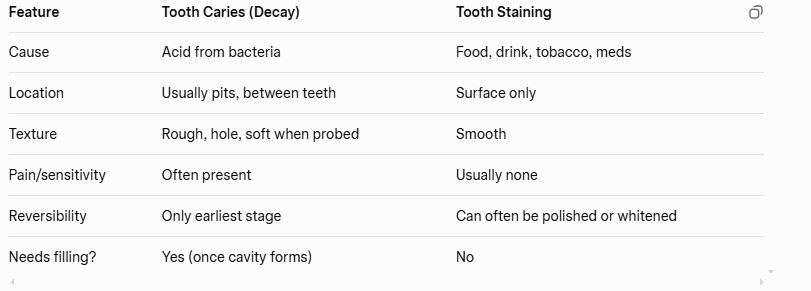
Difference between tooth caries and tooth staining
Home remedies for tooth caries pain (Temporary relief only!)
Disclaimer: These methods only provide temporary pain relief and DO NOT cure or reverse the cavity. You must see a dentist as soon as possible.
- Salt water rinse – ½ tsp salt in warm water, swish 30 seconds (reduces inflammation)
- Cold compress – On the cheek for 15 minutes (reduces swelling)
- Clove oil – Dab a tiny amount on cotton and place on the tooth (eugenol is a natural anesthetic)
- Over-the-counter painkillers – Ibuprofen or paracetamol (follow dosage)
- Oil pulling with coconut oil (10–15 min) – may reduce bacteria temporarily.
- Avoid extreme temperatures and very sweet foods.
Seek professional dental care immediately if pain is severe or swelling occurs.
Tooth caries is almost entirely preventable with good daily habits and regular dental visits. The moment you notice white spots, sensitivity, or dark spots — act fast. Early intervention can save you from pain, root canals, and expensive treatments.
Protect your smile — it’s the only one you’ve got! 🦷
Leave a Reply