

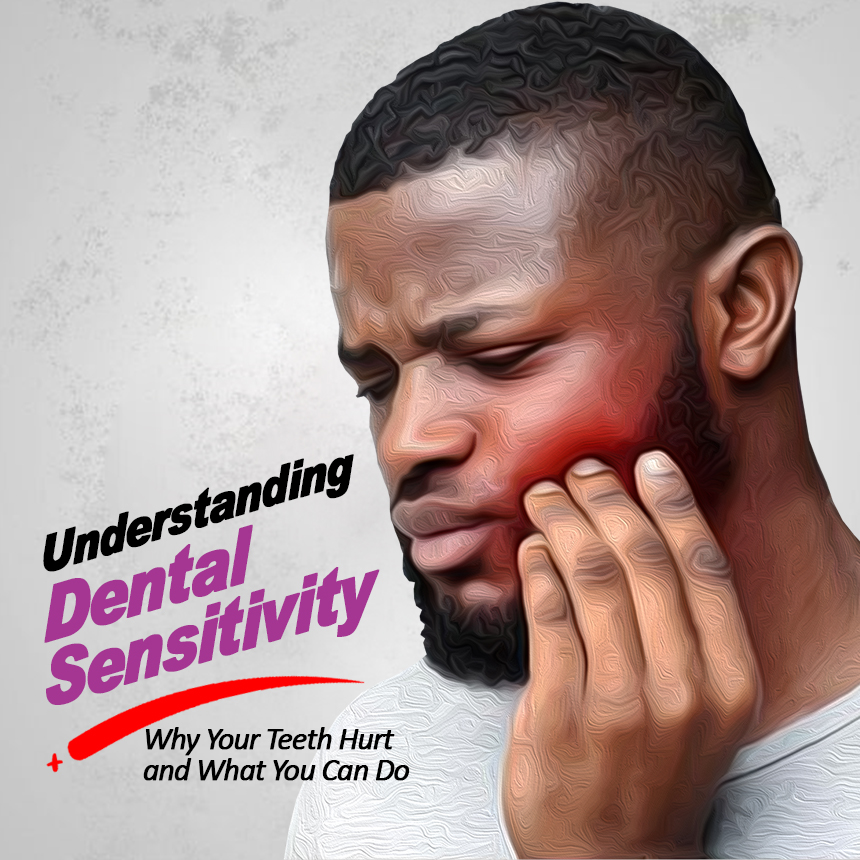
Do you ever wince when you take a sip of hot coffee or feel a sharp pang of pain when eating a cold scoop of ice cream? If so, you are not alone. Dental sensitivity, or dentin hypersensitivity, is one of the most common reasons patients visit our clinics in Lekki, Amuwo, and Sangotedo.
Understanding why this happens is the first step toward finding relief and reclaiming the joy of eating and drinking comfortably.
What Causes Dental Sensitivity?
To understand sensitivity, think of your tooth as having two main layers: the hard, protective outer shell called enamel, and a softer, porous layer beneath it called dentin.
Dentin contains thousands of tiny, microscopic tubes (tubules) that lead directly to the tooth’s nerve center (the pulp). When your enamel wears down or your gums recede, these tubules become exposed. When hot, cold, sweet, or acidic substances touch these exposed areas, they reach the nerve endings, causing that sudden, sharp pain.
Common triggers include:
- Aggressive Brushing: Using a hard-bristled toothbrush or brushing too hard can wear down enamel over time.
- Gum Recession: Periodontal disease or improper brushing techniques can cause gums to pull away, exposing the tooth roots, which lack the protective enamel layer.
- Acidic Foods and Drinks: Frequent consumption of soda, citrus juices, and wine can erode tooth enamel.
- Teeth Grinding (Bruxism): Clenching or grinding your teeth wears down the enamel surface.
- Tooth Decay or Fractures: Cracks, chips, or cavities can create pathways for sensitivity.
How to Manage and Treat Sensitive Teeth
The good news is that dental sensitivity is highly manageable. Here is how you can start feeling better today:
- Switch to Desensitizing Toothpaste: Many over-the-counter options contain compounds that help block the transmission of sensation from the tooth surface to the nerve. It may take a few uses to notice a difference.
- Use a Soft-Bristled Toothbrush: Be gentle. Use a soft brush and apply light pressure, focusing on cleaning rather than scrubbing.
- Watch Your Diet: Limit acidic foods and drinks. If you do consume them, rinse your mouth with plain water afterward to neutralize the pH levels.
- Maintain Excellent Oral Hygiene: Consistent brushing and flossing prevent gum disease and plaque buildup, which are major contributors to receding gums.
- Professional Dental Care: If your sensitivity is severe or persistent, it is time to visit Hilton Dental Clinic. We can assess the underlying cause—whether it is a cavity, a crack, or advanced gum recession—and provide professional treatments like fluoride varnishes, bonding, or surgical gum grafts to protect the exposed roots.
When to See a Dentist
While sensitivity is common, it should not be ignored. If the pain is localized to a specific tooth, keeps you awake at night, or causes swelling, please book an appointment immediately. Persistent sensitivity can sometimes signal a deeper issue, such as a cracked tooth or an infection that requires a root canal.
Don’t let pain dictate your diet. If you are struggling with tooth sensitivity, our team at Hilton Dental Clinic is here to help. Whether you are in Lekki, Amuwo, or Sangotedo, we are ready to provide a thorough evaluation and get you back to smiling—and eating—comfortably again.
Leave a Reply